
Your Read is on the Way
Every Story Matters
Every Story Matters
The Hydropower Boom in Africa: A Green Energy Revolution Africa is tapping into its immense hydropower potential, ushering in an era of renewable energy. With monumental projects like Ethiopia’s Grand Ethiopian Renaissance Dam (GERD) and the Inga Dams in the Democratic Republic of Congo, the continent is gearing up to address its energy demands sustainably while driving economic growth.
Northern Kenya is a region rich in resources, cultural diversity, and strategic trade potential, yet it remains underutilized in the national development agenda.

Can AI Help cure HIV AIDS in 2025

Why Ruiru is Almost Dominating Thika in 2025

Mathare Exposed! Discover Mathare-Nairobi through an immersive ground and aerial Tour- HD

Bullet Bras Evolution || Where did Bullet Bras go to?
You might think bedbugs only live in beds, but that’s just their launchpad. These creatures are masters of stealth, drawn not just to where you sleep but to anything nearby that offers a dark, tight, undisturbed hideout. They don’t fly. They don’t jump. They wait, tucked just inches from you — and most people never realize until the bites start piling up.
If you want to eliminate or avoid an infestation, you need to know their hideouts — all of them. Let’s break it down, room by room.
As their name suggests, your bed is prime real estate. But it’s not just about the mattress.
Mattress seams and piping: Check along the edges, especially where the seams meet.
Box spring: One of their top hideouts. The thin fabric and internal wood frame make perfect nesting spots.
Headboards: Especially if it’s fabric-covered or mounted to the wall.
Bed frames and joints: Wooden frames offer narrow cracks they love to squeeze into.
You might notice rust-colored stains, black specks (feces), shed skins, or eggs—these are clear signs they’ve moved in.
Yes, your living room is fair game too — especially if you nap there.
Under cushions: Especially the zippered seams and underneath removable covers.
Within the frame: Like beds, sofas have hidden wooden joints that bedbugs love.

Behind and under furniture: The darker, the better.
They don’t need to feed every night, so even a rarely used guest couch can become a haven over time.
They’re tiny — about the width of a credit card edge — and they’ll crawl into spots you’d never suspect.
Baseboards and crown molding: Gaps where the wall meets floor or ceiling are prime hiding places.
Electrical outlets and light switches: They slip behind cover plates and into the wall.
Wall cracks or wallpaper seams: Especially near beds or seating areas.
Picture frames and clocks: Any object that hangs undisturbed on the wall is fair game.
These spots are harder to inspect without tools, so if you suspect an infestation, a pro with the right equipment may be needed.
Bedbugs don’t live on your body, but they’ll happily live in things that stay close to you.
Luggage: They’re notorious for hitching rides from hotels to your home.
Folded clothing: Especially if stored under the bed or rarely worn.
Shoe boxes, purses, backpacks: Anything that stays closed and dark.
Laundry baskets: Clean or dirty — it doesn’t matter.
If they’re not feeding, they’re waiting. And they can survive months without a meal in these hiding places.
Though not their first choice, bedbugs will settle into thick rugs or the corners where carpet meets the wall.
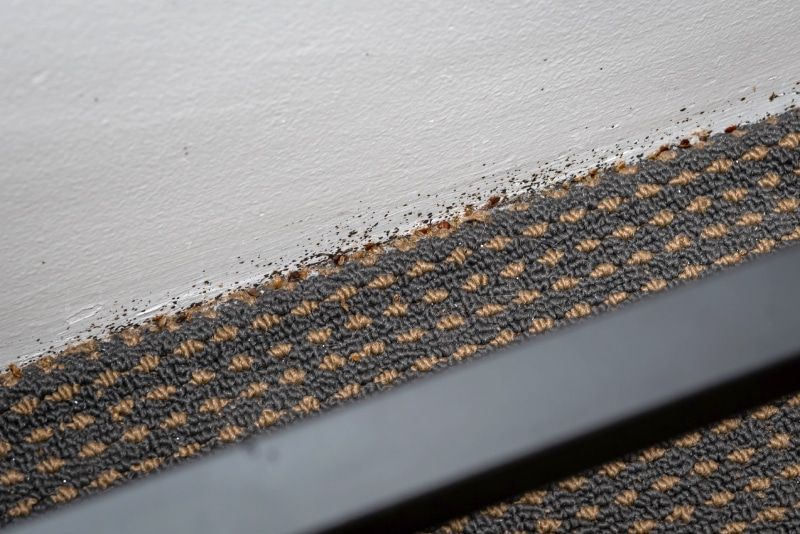
Edges and corners of rooms: Vacuum thoroughly and regularly.
Under furniture: Especially if you haven’t moved it in a while.
Behind area rugs: If your rug sits under your bed or couch, check underneath.
Regular vacuuming can help dislodge early-stage infestations before they get comfortable.
Look for:
Tiny reddish-brown bugs (adult bedbugs are 4–5 mm)
Small white eggs (like a grain of rice)
Dark fecal spots or smears
Molted skins (a sign they’re growing)
A musty, slightly sweet odor in severe cases
Bites are a clue, but not a guarantee—some people don’t react to them. Use a flashlight and a magnifying glass if necessary.
The worst mistake you can make? Assuming that because you can’t see them, they’re not there.
Bedbugs are resilient, sneaky, and excellent at hiding just out of reach. But with the right knowledge, a good flashlight, and a little grit, you can find them before things spiral out of control.
Inspect early. Intervene fast. And never underestimate where they might be hiding






0 comments