
Your Read is on the Way
Every Story Matters
Every Story Matters
The Hydropower Boom in Africa: A Green Energy Revolution Africa is tapping into its immense hydropower potential, ushering in an era of renewable energy. With monumental projects like Ethiopia’s Grand Ethiopian Renaissance Dam (GERD) and the Inga Dams in the Democratic Republic of Congo, the continent is gearing up to address its energy demands sustainably while driving economic growth.
Northern Kenya is a region rich in resources, cultural diversity, and strategic trade potential, yet it remains underutilized in the national development agenda.

Can AI Help cure HIV AIDS in 2025

Why Ruiru is Almost Dominating Thika in 2025
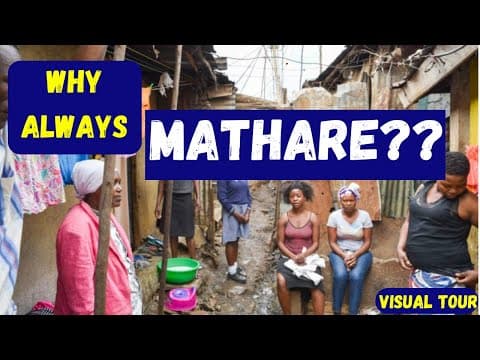
Mathare Exposed! Discover Mathare-Nairobi through an immersive ground and aerial Tour- HD

Bullet Bras Evolution || Where did Bullet Bras go to?
The Prayer I Never Told Anyone About
I once asked God to change me into a girl.
Not out loud. Not boldly. Just quietly, the way desperate thoughts form when you’re small and tired and trying to understand why life feels heavier on you than on others. I didn’t think of it as a strange prayer then. It felt logical. Almost practical. Like asking for rain when the ground is dry.
I wasn’t trying to escape being a boy. I was trying to escape being me — the version of me the world seemed to reject before I ever opened my mouth.
What Girls Represented to Me
The girls in my school were beautiful in ways I didn’t yet have words for. They were clean. Their uniforms were pressed. Their shoes weren’t cracked at the sole or held together by stubbornness. Their hair smelled like soap. Their voices were soft. Teachers smiled at them differently. Other students protected them instinctively. Even punishment came gently.
They were liked.
And I noticed that liking seemed to follow them automatically, the way dust followed me.
I didn’t want dresses. I didn’t want long hair. I didn’t want to be feminine. I wanted what they seemed to carry effortlessly — safety, neatness, gentleness, belonging. I wanted to walk into a room and not feel like something that needed to be fixed.
The Boy With Dust on His Feet
I was dirty most days. Not because I wanted to be — because water wasn’t always easy. Because soap ran out. Because shoes didn’t last. Because uniforms tore and stayed torn. Because when you’re poor, your body becomes evidence of it before your mouth can hide it.
My feet were dusty. My clothes were tired. My bag sagged. And I knew it. Worse, I knew others knew it. Children don’t need cruelty to understand hierarchy — it announces itself in laughter, silence, distance, and how quickly people look away.
Yet somehow, I was intelligent.
And that confused me.
Because intelligence didn’t stop the looks. It didn’t soften the jokes. It didn’t make teachers overlook the smell of sweat or the stains of poverty. It didn’t make girls sit next to me. It didn’t make boys respect me. It just made me aware of how unfair everything felt.
Being smart didn’t make me safe. It made me lonely in sharper detail.
Why the Prayer Made Sense
So one day — or maybe many days — I prayed.
Not because I hated myself. But because I thought God might understand efficiency. If girls were treated better, cleaner, kinder, more gently… then why not just make me one? It seemed like a shortcut. Like switching lanes in traffic instead of sitting in congestion and calling it character-building.
I wasn’t asking to be loved romantically. I was asking to be left alone. To stop being mocked. To stop being the dirty one. To stop feeling like my body betrayed me before I ever spoke.
I didn’t want beauty. I wanted peace.
And at that age, femininity looked like peace.
Intelligence Without Shelter
I remember realizing early that intelligence didn’t translate into dignity. You could be the smartest kid in class and still be the one nobody sat next to. You could know the answers and still be invisible. You could solve equations but not solve loneliness.
That bothered me more than the poverty itself.
Because poverty, at least, had explanations — parents, money, luck, systems. But rejection felt personal. It felt like my fault. Like something in me was inherently off. Like I was built wrong for the world I was born into.
So when I saw girls glide through corridors unafraid, untouched, unmocked, I didn’t see gender — I saw protection.
Cleanliness as a Currency
Cleanliness, I learned early, isn’t just hygiene. It’s social capital.
It decides who gets grace and who gets scolded. Who gets sympathy and who gets suspicion. Who is seen as disciplined and who is seen as careless. Who is trusted. Who is doubted.
The girls were always clean.
Not just physically — socially. Their mistakes were forgiven faster. Their tears were taken seriously. Their silence was interpreted as shyness, not stupidity. Their anger was softened into emotion. Their sadness was met with concern.
Mine was met with punishment.
So when I prayed, I wasn’t praying for estrogen. I was praying for mercy.
The Quiet Comparison That Never Left
I started measuring myself against girls without meaning to.
Not their bodies — their lives.
How easily they were believed. How gently they were spoken to. How rarely they were accused. How naturally people protected them. How often teachers defended them. How little they had to prove to deserve patience.
I didn’t envy their femininity.
I envied their allowance.
They were allowed to be soft. Allowed to be weak. Allowed to cry. Allowed to fail. Allowed to be messy emotionally without being labeled defective.
I wasn’t.
The Boy Who Wanted Rest, Not Change
I don’t think I wanted to be a girl.
I think I wanted rest.
Rest from explaining myself. Rest from trying to look normal. Rest from defending my worth. Rest from always feeling like I needed to outperform just to qualify for basic respect.
Girls, to me, represented rest.
And boys — at least boys like me — represented endurance.
What That Prayer Still Means to Me
I don’t know when I stopped praying that prayer. I don’t remember a moment of resolution. It didn’t end with revelation or healing or understanding. It just… faded. Like childhood fears fade — not because they’re resolved, but because something heavier replaces them.
But I still remember the feeling behind it.
Not gender confusion.
Not identity crisis.
Just exhaustion.
The exhaustion of being young and poor and visible in all the wrong ways. The exhaustion of being intelligent in a body the world had already dismissed. The exhaustion of knowing something wasn’t fair but not knowing who to blame — God, society, fate, myself.
Sitting With That Version of Me
Sometimes I think about that boy — dusty feet, torn uniform, bright mind, quiet pain — and I don’t feel embarrassment. I feel tenderness. I feel grief. I feel something like apology.
Because he wasn’t asking for transformation.
He was asking for relief.
He wasn’t trying to escape masculinity.
He was trying to escape humiliation.
And I’m still not sure what to make of that.
I’m still sitting with it.
Still wondering what it means that at such a young age, I associated softness with safety, cleanliness with worth, femininity with survival, and boyhood with burden.
Still unsure whether that prayer says more about gender… or poverty… or childhood… or the human instinct to reach for whatever looks like rescue.
And maybe that uncertainty is where this story stays.




0 comments