
Your Read is on the Way
Every Story Matters
Every Story Matters
The Hydropower Boom in Africa: A Green Energy Revolution Africa is tapping into its immense hydropower potential, ushering in an era of renewable energy. With monumental projects like Ethiopia’s Grand Ethiopian Renaissance Dam (GERD) and the Inga Dams in the Democratic Republic of Congo, the continent is gearing up to address its energy demands sustainably while driving economic growth.
Northern Kenya is a region rich in resources, cultural diversity, and strategic trade potential, yet it remains underutilized in the national development agenda.

Can AI Help cure HIV AIDS in 2025

Why Ruiru is Almost Dominating Thika in 2025

Mathare Exposed! Discover Mathare-Nairobi through an immersive ground and aerial Tour- HD

Bullet Bras Evolution || Where did Bullet Bras go to?
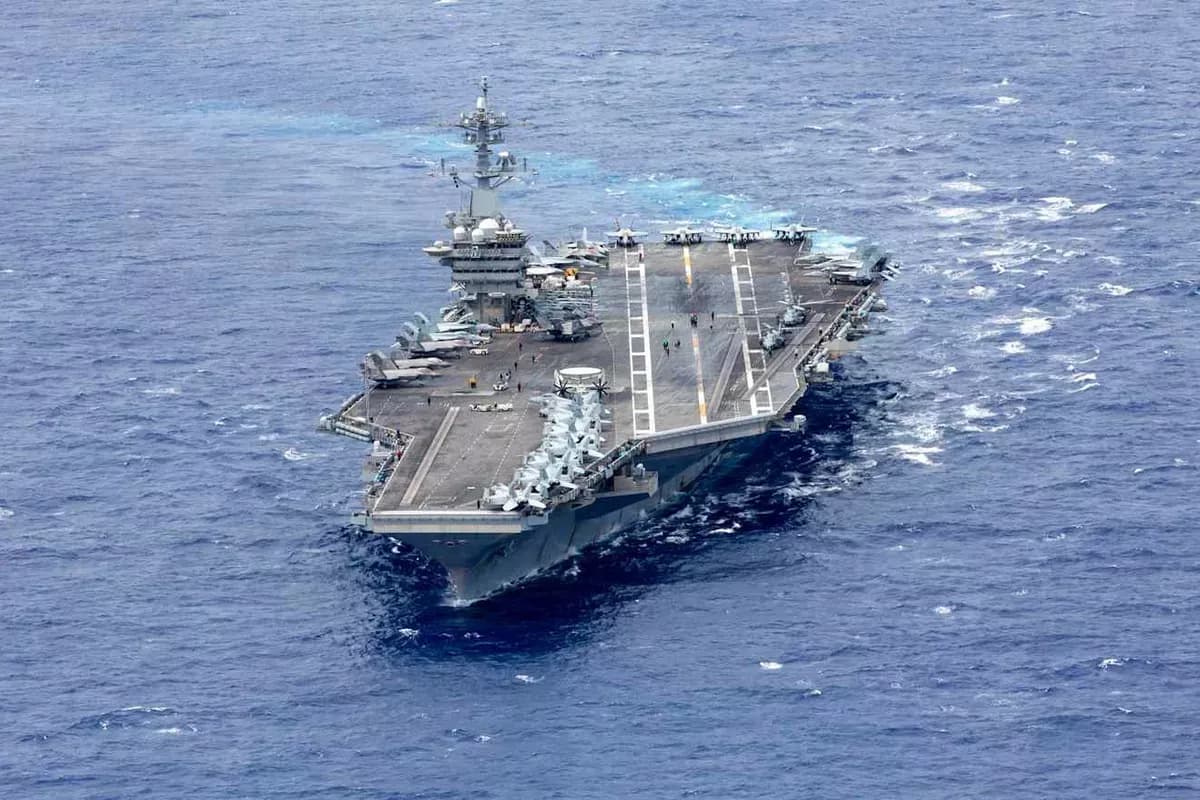
The presence of the USS Abraham Lincoln (CVN-72) near contested waters in the Middle East represents more than routine naval deployment. Aircraft carriers serve as mobile airbases capable of projecting sustained air power across large operational zones. Their arrival in sensitive regions is widely interpreted as a signal of readiness and deterrence.
In the current confrontation involving Iran and the United States, the carrier’s positioning has inevitably drawn attention from both military planners and political observers.
Iranian military-linked communications have suggested that missiles or drones were directed toward the carrier during recent escalation phases. These statements appear designed to demonstrate capability and readiness to challenge high-value naval assets.
However, no independent confirmation has emerged indicating that the carrier sustained damage. The absence of verified impact suggests that these claims may be part of strategic messaging rather than confirmed battlefield success.
Even so, the repetition of such claims signals that the vessel has become a central reference point in the confrontation narrative.
The carrier’s operations near the Strait of Hormuz place it within one of the world’s most critical shipping corridors. A large portion of global energy supplies passes through this narrow passage, making any military activity in its vicinity globally significant.
From a strategic perspective, proximity to this maritime route increases the visibility of the carrier while simultaneously raising the stakes of any confrontation involving it.
Beyond their operational strength, aircraft carriers carry symbolic importance. Targeting one, or even claiming to do so, allows a state to project confidence and deterrence capability.
For Iran, referencing the carrier reinforces a message that major Western naval assets operating near its sphere of influence remain within its defensive calculations. For the United States, maintaining uninterrupted carrier operations signals stability and continued control of maritime posture in the region.
This interaction reflects a contest not only of military capability but also of perception.
Reports of Iranian surveillance drones approaching U.S. naval formations indicate that monitoring operations are ongoing at relatively close range. Such encounters typically reflect intelligence-gathering efforts rather than immediate attack intentions.
These interactions nonetheless demonstrate that naval forces from both sides are operating within overlapping observation zones, increasing the possibility of miscalculation.
Aircraft carriers occupy a unique place in modern naval strategy. Any confirmed successful strike against one would represent a dramatic shift in escalation dynamics and would likely provoke a strong response.
For this reason, references to the carrier must be interpreted within the broader context of signaling behavior, deterrence positioning, and strategic communication between competing military powers.
At present, available indicators suggest that the focus on the USS Abraham Lincoln reflects geopolitical signaling rather than confirmed operational damage.




0 comments