
Your Read is on the Way
Every Story Matters
Every Story Matters
The Hydropower Boom in Africa: A Green Energy Revolution Africa is tapping into its immense hydropower potential, ushering in an era of renewable energy. With monumental projects like Ethiopia’s Grand Ethiopian Renaissance Dam (GERD) and the Inga Dams in the Democratic Republic of Congo, the continent is gearing up to address its energy demands sustainably while driving economic growth.
Northern Kenya is a region rich in resources, cultural diversity, and strategic trade potential, yet it remains underutilized in the national development agenda.
Can AI Help cure HIV AIDS in 2025

Why Ruiru is Almost Dominating Thika in 2025

Mathare Exposed! Discover Mathare-Nairobi through an immersive ground and aerial Tour- HD

Bullet Bras Evolution || Where did Bullet Bras go to?
Worldcoin is a cryptocurrency and identity verification project co-founded by Sam Altman (CEO of OpenAI), along with Alex Blania and Max Novendstern. It aims to create a universal global identity and financial network — even for people who don't have access to traditional banking systems.
At its core, the project revolves around two main pillars:
1.World ID – a privacy-preserving digital identity
2.Worldcoin Token (WLD) – a cryptocurrency distributed to individuals who verify their identity
The most striking element of Worldcoin is its use of a futuristic biometric device called the “Orb.”
A chrome-sphere-shaped device that scans people’s irises.
Used to verify that a person is unique and human without storing identifiable images.
Upon verification, the individual receives a World ID and some WLD tokens.
The biometric data is converted into a unique cryptographic hash.
Worldcoin claims no raw biometric data is stored after enrollment.
Uses zero-knowledge proofs and secure multiparty computation to ensure privacy.
Worldcoin envisions solving two key global challenges:
Digital Identity: Proving personhood in the age of AI (especially important as bots become indistinguishable from humans online).
Universal Basic Income (UBI): Enabling global wealth distribution via crypto airdrops, especially in regions with little economic opportunity.
The idea is that by giving every human on Earth a verified ID and a share of a token, you can create a global financial system that’s fair, inclusive, and AI-resilient.
Sam Altman – Better known for leading OpenAI, he brings credibility and reach.
Alex Blania – CEO of Tools for Humanity (the company behind Worldcoin).
Max Novendstern – Co-founder, formerly of Bridgewater Associates and Wave.
The project is backed by top-tier investors, including Andreessen Horowitz (a16z) and Blockchain Capital.
1.User Finds an Orb: Available in various global cities via operators (Orb Operators).
2.Verification Process: Orb scans the user's iris.
3.User Receives World ID: A decentralized proof of unique personhood.
4.User Gets WLD Tokens: Distribution varies by country and region.
5.App Integration: Users manage their identity and tokens through the World App, the official wallet.
WLD Token is an ERC-20 token on the Ethereum mainnet.
Distributed as incentives for verification and as a potential future governance token.
Max supply: 10 billion tokens.
Initial circulating supply was small, but grows as more people get verified.
Not available in certain jurisdictions (like the U.S.) due to regulatory concerns.
Worldcoin has been highly controversial since its launch. Key criticisms include:
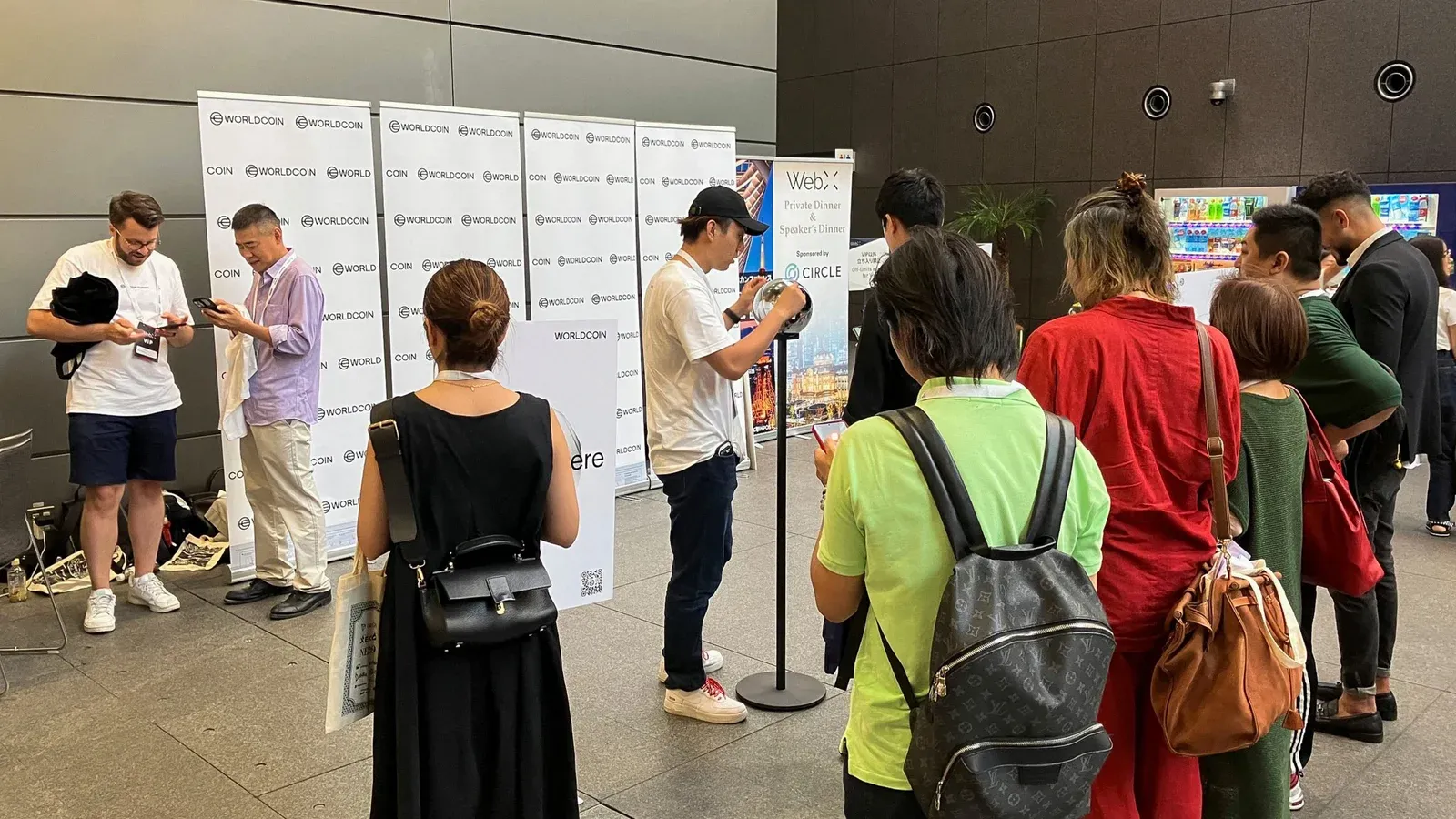
Critics argue that scanning people's irises, especially in the Global South, could create exploitative data practices.
Questions have been raised about whether biometric hashes are truly irreversible and unidentifiable.
Reports have suggested that individuals, especially in developing nations, were not fully informed of what they were agreeing to.
What happens if someone's World ID is compromised? There's no redo for biometric identity.
Banned or investigated in countries like Kenya, Germany, and France due to privacy law violations.
Some believe Worldcoin is more about giving AI companies a way to separate humans from bots in the future, which could be monetized.
Worldcoin has set up Orbs in cities across South America, Africa, Asia, and Europe.
Adoption has been strong in some areas due to the free token incentive.
The project reports millions of sign-ups but has not yet achieved true global scale.
Integration with Ethereum L2 solutions for cheaper transactions.
World App updates introducing identity-based features and wallet upgrades.
Ongoing regulatory negotiations in Europe and Latin America.
Expansion of Orb availability through partnerships with local startups.
Worldcoin wants to be the backbone of digital identity and universal income in an AI-centric future. However, it faces a complex road ahead balancing:
Technological adoption vs. ethical concerns
Regulatory compliance vs. decentralization
Global access vs. local norms and sovereignty
Whether it becomes the foundation of a decentralized, AI-resilient identity layer or collapses under scrutiny remains to be seen.




0 comments