
Your Read is on the Way
Every Story Matters
Every Story Matters
The Hydropower Boom in Africa: A Green Energy Revolution Africa is tapping into its immense hydropower potential, ushering in an era of renewable energy. With monumental projects like Ethiopia’s Grand Ethiopian Renaissance Dam (GERD) and the Inga Dams in the Democratic Republic of Congo, the continent is gearing up to address its energy demands sustainably while driving economic growth.
Northern Kenya is a region rich in resources, cultural diversity, and strategic trade potential, yet it remains underutilized in the national development agenda.

Can AI Help cure HIV AIDS in 2025

Why Ruiru is Almost Dominating Thika in 2025

Mathare Exposed! Discover Mathare-Nairobi through an immersive ground and aerial Tour- HD

Bullet Bras Evolution || Where did Bullet Bras go to?
In the early hours of the morning, the city of Rasht in northern Iran was rocked by a powerful explosion that lit up the skies and sent shockwaves through the surrounding communities. The explosion followed an Israeli precision airstrike targeting what was identified as a strategic military installation within the city’s Sefid Rud industrial area. Residents were reportedly issued advance evacuation warnings, which suggests the strike was deliberately calibrated to avoid civilian casualties.
The attack marks the first time the northern Iranian city—nestled near the Caspian Sea and far from typical conflict zones—has been thrust directly into the frontlines of Israel’s ongoing campaign against Iranian military influence.
The facility targeted in Rasht is believed to be part of Iran’s growing network of industrial and technological infrastructure with suspected ties to missile development and advanced weapons logistics. After the strike, fire engulfed the area, with massive plumes of black smoke rising into the sky, visible from across the city. Eyewitnesses described a deafening blast followed by a rolling wave of heat and light—clear evidence of a high-impact, high-yield payload.
Emergency response teams were seen scrambling toward the impact zone, though the military cordoned off the area within minutes. No immediate reports of casualties were confirmed, but the psychological toll on the civilian population was evident, with widespread panic and displacement reported in nearby neighborhoods.
This latest strike is not an isolated incident but part of a broader and intensifying Israeli operation targeting Iran’s strategic infrastructure. Over the past week, Israel has expanded its scope of action beyond traditional southern and central zones, directing strikes at nuclear-linked facilities, weapons storage sites, and key industrial nodes.
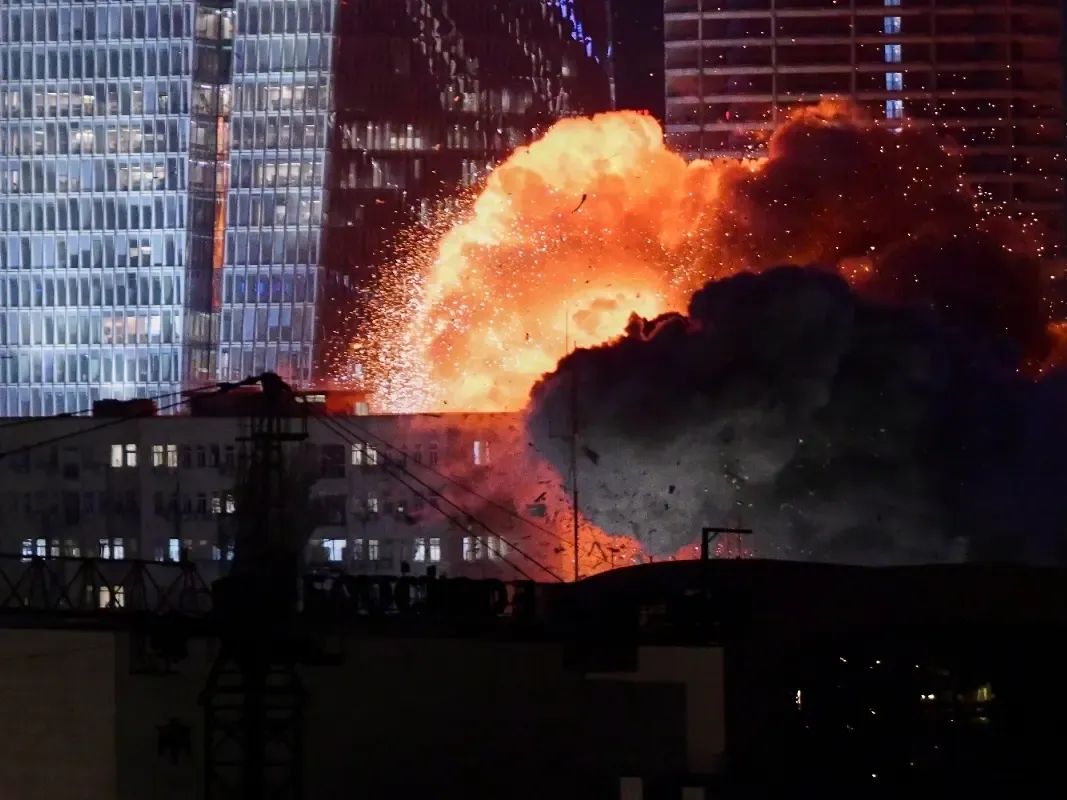
Rasht’s Sefid Rud zone was likely chosen due to its proximity to advanced technological hubs and transportation corridors that link northern Iran to other logistical networks. By striking this far north, Israel signals both reach and intent—no part of Iran is considered untouchable in its campaign to dismantle perceived threats.
The airstrike on Rasht follows a pattern of escalating tit-for-tat military exchanges between Israel and Iran, each involving more daring and sophisticated operations. Iran has launched several retaliatory strikes in recent days, targeting both Israeli territory and allied installations. While some attacks have caused injuries and infrastructure damage, others were intercepted or deflected.
The strike in Rasht may also have diplomatic reverberations. Iran has repeatedly accused Israel of violating its sovereignty, while Israel maintains that it is acting in preemptive defense against threats emanating from Iran’s military-industrial buildup. Both sides are now engaged in an undeclared war that continues to escalate despite international calls for restraint.
The explosion in Rasht serves as a grim reminder of how rapidly regional flashpoints can ignite. With both countries expanding the geography of their conflict, and neither side showing signs of de-escalation, the risk of miscalculation is growing. Cities once considered remote from the frontline—like Rasht—are now active theaters in a conflict that threatens to spill beyond borders.
Unless there is a meaningful diplomatic intervention or strategic recalibration, the strikes will likely continue. For the civilians of Rasht and other cities now in the crosshairs, the only certainty is that the war no longer feels distant.






0 comments