
Your Read is on the Way
Every Story Matters
Every Story Matters
The Hydropower Boom in Africa: A Green Energy Revolution Africa is tapping into its immense hydropower potential, ushering in an era of renewable energy. With monumental projects like Ethiopia’s Grand Ethiopian Renaissance Dam (GERD) and the Inga Dams in the Democratic Republic of Congo, the continent is gearing up to address its energy demands sustainably while driving economic growth.
Northern Kenya is a region rich in resources, cultural diversity, and strategic trade potential, yet it remains underutilized in the national development agenda.

Can AI Help cure HIV AIDS in 2025

Why Ruiru is Almost Dominating Thika in 2025

Mathare Exposed! Discover Mathare-Nairobi through an immersive ground and aerial Tour- HD

Bullet Bras Evolution || Where did Bullet Bras go to?
At least 52 civilians have been massacred in eastern Democratic Republic of Congo (DRC) after a series of violent attacks carried out by the Islamic State-linked Allied Democratic Forces (ADF) rebels. The killings, which took place in the Beni and Lubero territories between August 9 and 16, have been described as some of the most gruesome assaults in recent months, drawing strong condemnation from both local leaders and the United Nations.
According to survivors and local officials, the attacks unfolded with chilling precision. The rebels arrived at night, storming villages and targeting unsuspecting residents. Villagers were woken from their sleep, forcibly gathered in one place, tied with ropes, and then hacked to death using machetes and hoes.
Macaire Sivikunula, chief of Lubero’s Bapere sector, recounted the harrowing ordeal:
“When they arrived, they first woke the residents, gathered them in one place, tied them up with ropes, and then began to massacre them with machetes and hoes.”
The sheer brutality of the killings has left survivors traumatized, with families mourning the loss of loved ones and entire villages plunged into fear.
One of the worst-hit areas was Melia village, where at least 30 civilians were slaughtered in a single night. Local administrator Alain Kiwewe confirmed that among the victims were children and women whose throats were slit inside their homes, while several houses were also torched. The deliberate targeting of non-combatants, particularly women and children, underscores the rebels’ willingness to instill maximum terror.
The United Nations Organization Stabilization Mission in the DRC (MONUSCO) condemned the killings in the strongest possible terms, noting that at least 52 people had been confirmed dead, including eight women and two children. However, the toll is expected to rise as search and recovery efforts continue in remote villages where rebels left behind destruction.
The spokesperson for MONUSCO emphasized the urgency of protecting civilians and holding perpetrators accountable, describing the massacre as part of a pattern of systematic violence that has gripped the region for decades.
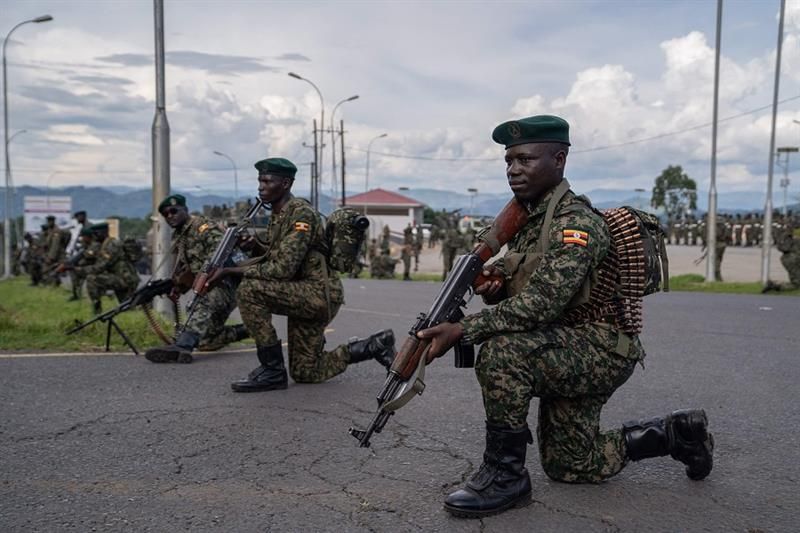
Military officials said the killings were an act of revenge. The ADF, originally a Ugandan rebel group but now linked to the Islamic State, has been suffering heavy losses in recent weeks following intensified operations by Congolese forces, supported by Uganda. According to Lt. Elongo Kyondwa Marc, a Congolese army spokesperson, the group deliberately targeted civilians to retaliate against government offensives.
The rebels’ strategy of punishing civilians is not new. Over the years, the ADF has repeatedly turned on villages, slaughtering residents in response to military setbacks. This cycle of attack and retaliation has made eastern Congo one of the most unstable regions in Africa.
The ADF is among dozens of armed groups operating in Congo’s mineral-rich east, a region long plagued by conflict over land, ethnic rivalries, and control of lucrative natural resources such as gold and coltan. Despite military campaigns and regional efforts to dismantle militias, civilian populations remain the primary victims.
In late July, the same group killed 38 people in an attack on a church, further illustrating their capacity for violence and disregard for human life.
The massacre has once again highlighted the urgent need for stronger international and regional cooperation in restoring peace to eastern Congo. The Congolese army and Uganda have stepped up joint operations, but experts warn that without tackling the group’s financing, recruitment networks, and cross-border sanctuaries, the cycle of violence is likely to persist.
The killings also raise broader concerns for stability in the Great Lakes region, as militant groups with external affiliations, such as the ADF’s links to Islamic State, contin[l;k;ue to destabilize fragile states and exploit porous borders.
The slaughter of 52 civilians in Beni and Lubero is a stark reminder of the fragility of peace in eastern Congo and the human cost of persistent insurgency. While the Congolese government and its allies vow to step up operations against the rebels, civilians remain the most vulnerable in a conflict that shows no signs of abating.
The attacks underline the urgent need for both military action and long-term political solutions to address the root causes of instability in the region.





0 comments