
Your Read is on the Way
Every Story Matters
Every Story Matters
The Hydropower Boom in Africa: A Green Energy Revolution Africa is tapping into its immense hydropower potential, ushering in an era of renewable energy. With monumental projects like Ethiopia’s Grand Ethiopian Renaissance Dam (GERD) and the Inga Dams in the Democratic Republic of Congo, the continent is gearing up to address its energy demands sustainably while driving economic growth.
Northern Kenya is a region rich in resources, cultural diversity, and strategic trade potential, yet it remains underutilized in the national development agenda.

Can AI Help cure HIV AIDS in 2025

Why Ruiru is Almost Dominating Thika in 2025

Mathare Exposed! Discover Mathare-Nairobi through an immersive ground and aerial Tour- HD

Bullet Bras Evolution || Where did Bullet Bras go to?
Prime Minister Benjamin Netanyahu has drawn a firm line in the sand: Israel will not agree to any ceasefire until it has full control over every part of the Gaza Strip. According to him, anything less than total military and security dominance would risk enabling Hamas and other militant factions to regroup and strike again. He frames this war as a matter of existential necessity, not only to secure Israel’s borders but also to re-establish the nation’s deterrence against future attacks.
This hardened stance has been met with growing concern, as it signals an indefinite extension of a war that has already caused massive destruction and suffering. Netanyahu’s declaration underscores a broader political narrative that places military victory above international mediation or humanitarian compromise.
Over the past several weeks, the Israel Defense Forces (IDF) have significantly expanded their ground and aerial operations throughout Gaza. What began as a targeted response to Hamas attacks has now evolved into one of the most sweeping military offensives in the region’s recent history. Entire neighborhoods in northern and central Gaza have been razed. Residential buildings, suspected militant hideouts, tunnels, and even hospitals have come under fire as Israeli forces push into deeper pockets of the Strip.
Meanwhile, fierce resistance from Hamas fighters continues in densely populated areas, contributing to the high casualty count. Israel maintains that its objective is to dismantle Hamas' military infrastructure and eliminate its leadership, but this mission has also brought untold misery to Gaza’s civilian population, with no safe zones left untouched by the violence.
The ongoing siege and bombardment of Gaza have plunged the enclave into a full-scale humanitarian disaster. With critical infrastructure decimated, hospitals are now operating under near-impossible conditions. Medical personnel lack even the most basic supplies to treat the wounded, and fuel shortages have rendered many emergency services inoperable. Families have been forced to flee repeatedly as military operations expand from one zone to another, leaving hundreds of thousands without shelter.
Access to clean water is rapidly diminishing, food scarcity is worsening, and communicable diseases are beginning to spread in overcrowded shelters. International aid agencies have repeatedly called for uninterrupted humanitarian corridors, but such appeals have yielded only temporary or partial relief. The situation on the ground is dire, and unless drastic intervention occurs, many fear a looming public health disaster.
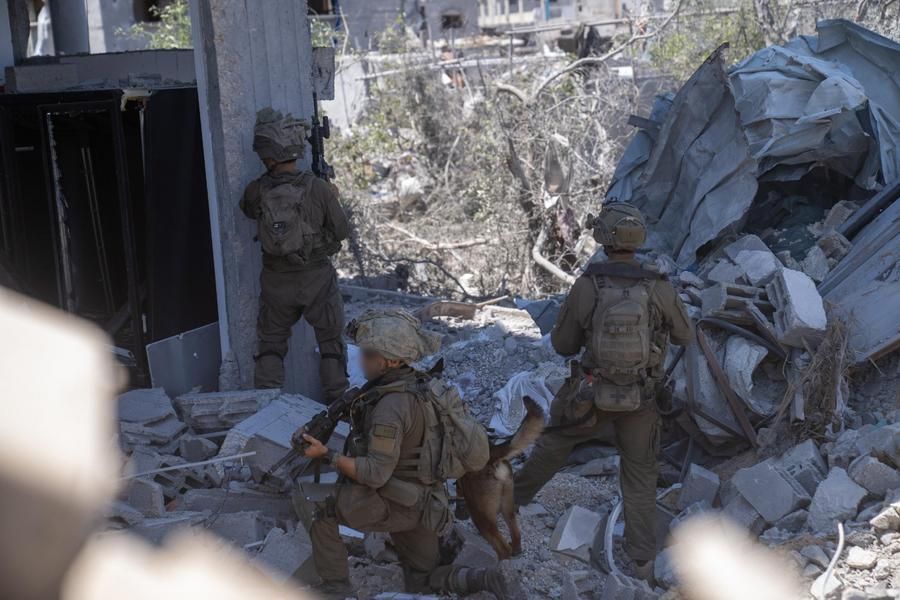
As the military campaign escalates, so too does global scrutiny. Key international allies who initially stood behind Israel's right to self-defense are now expressing growing discomfort with the scale and duration of the offensive. Diplomatic calls for restraint, accountability, and proportionality have become more urgent. Several foreign governments have begun to reassess their support, citing the overwhelming civilian toll and the visible breakdown of humanitarian norms.
Public protests in major world capitals reflect increasing opposition to the war, with calls for sanctions and international legal action growing louder. Yet, Israel remains largely unmoved by these external pressures. Netanyahu continues to insist that any pause in military action without full strategic victory would constitute a dangerous setback, framing international criticism as either naive or politically motivated.
Behind the scenes, efforts to broker a ceasefire continue, but progress has been minimal. Regional actors and global powers have attempted to facilitate negotiations, with proposals for temporary truces in exchange for hostage releases or aid distribution. However, these initiatives have repeatedly faltered. Israel's precondition—that Hamas must be fully neutralized before any long-term ceasefire is considered—remains non-negotiable.
On the other hand, Hamas has shown no intention of surrendering or disarming, instead accusing Israel of war crimes and vowing to continue resisting occupation. This deadlock leaves no viable diplomatic path in the immediate future. As each side doubles down, the human cost continues to rise, and the window for de-escalation narrows dangerously.
With Netanyahu's declaration solidifying Israel’s military posture, the trajectory of the Gaza conflict appears increasingly protracted. The stated goal of full territorial control implies weeks or even months of continued operations. Such a timeline is expected to further strain Israel’s international relations and could potentially destabilize surrounding regions.
Meanwhile, Gaza’s civilian population remains trapped in the crossfire, facing mounting risks with little hope for reprieve. The prospect of a long-term resolution looks bleak as military objectives overshadow humanitarian concerns. The coming weeks will be critical in determining whether diplomacy can re-emerge or whether the region is headed toward even deeper chaos and suffering.






0 comments